

Shrikhand Mahadev Yatra – A Trek Guide
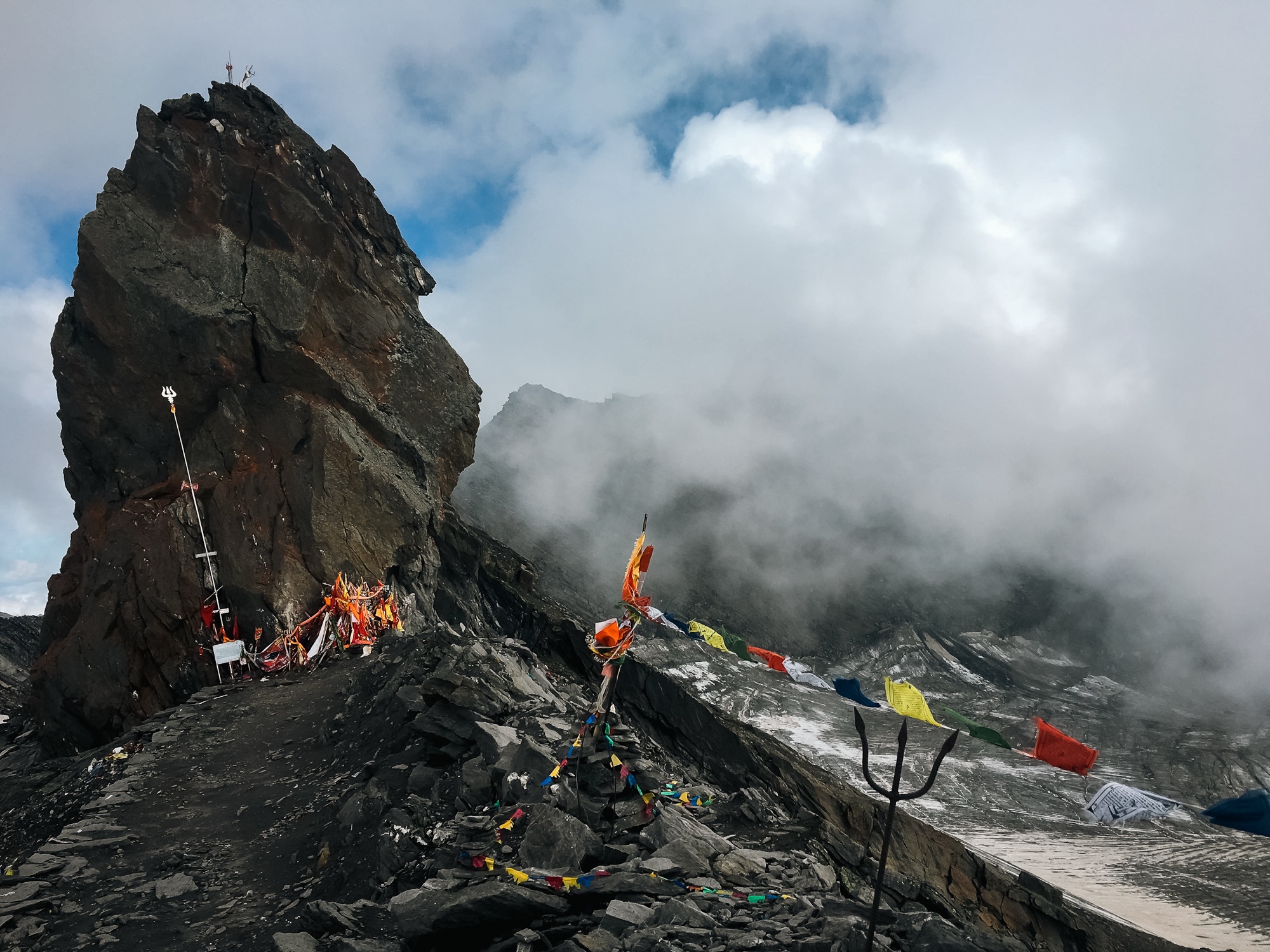
Shrikhand Mahadev trek is the saga of speaking stones, boulders called as stairs, flamboyant waterfalls, canals cutting through the ways, muddy ways beyond clouds, scenic snow-clad mountains and all that which is a part of the Mother Nature.
Legend has it that there was a demon named Bhasmasur, and he preached to please Lord Shiva through hard penance. Lord Shiva was pleased and accorded him the power called Bhasma Kangan, which allowed him to turn every living being into ashes he would touch their head.
Bhasmasur, soaked in his pride after gaining the powers, wanted to turn Lord Shiva into ash and tried to touch him. Lord Shiva had to get help from Lord Vishnu and vanished into the caves on the top of the Mountain which is now called Shrikhand Mountain.
Lord Vishnu then transformed himself into a female enchanter named Mohini and then tricked Bhasmasur into touching his own head, which turned him into ash.
The trek is mostly famous as a pilgrimage to the peak of Shrikhand Mahadev, where a rock-made Shivling of around 75 feet in height and 46 feet in thickness is situated at a height of 18570 ft in the Indian Himalayas. The Shivling appears to be God Shiva’s face with matted hair, eyes and nose when looked at from the front and is fissured (khandit in Hindi), has cracks in it, hence named SHRI ‘KHAND’ MAHADEV.
Shrikhand Mahadev Trek Timings
Usually, the Shri Khand Mahadev pilgrimage is permited from the full moon day in July to the full moon day in August (Ashada Poornima to Shravana Poornima as per the Hindu Vikram calendar) by the Himachal Pradesh state government. The schedule dates are annouced by the Himachal Government every year as per the weather forecasts.
However, the official dates remain (1st to 15th of July) in case there is no weather calamity.
Thousands of pilgrims and Shiva devotees try their hands at trekking to Shrikhand every year. Other than devotees, there are trekkers, adventurers, and climbers who do not miss their chance to witness and experience the surreal beauty of this untouched and uncivilised region.
How the Shrikhand Mahadev Trek goes
The trek is around 32 kilometres on one side. The route is marked with signs throughout the valley till ShriKhand peak. You see signs of Yellow and Red paint on boulders as the guidelines for the summit. The trek goes like:
Jaon Village – Singhad Village (4 Km – straight along with a rivulet)
Singhad Village – Barhati Nala (2.5 Km – steep walk through dense forest)
Barhati Nala – Thachru (5 Km – steep path with sharp turns)
Thachru – Kali Ghati (3 Km – more steep path with a sharp trench aside)
Kali Ghati –Bheem Duari (8 Km – ups and downs with a few water ravines)
Bheem Duari – Parvati Bagicha (3 Km – upright walk through green plantation)
Parvati Bagicha – Nayan Sarovar (3 Km – path through huge rocks and wild flowers)
Nayan Sarovar – Shrikhand Mahadev Peak (5-6 Km – vertical walk on reefs, a few glaciers and low oxygen)
Jaon Village: Shrikhand Mahadev trek starts from Jaon, a small village in Nirmand taluka of Kullu District of Himachal Pradesh. It is located on one side of the Kurpan Gad streamlet, which later merges in Sutlej River. The village is 23 kilometres from Nirmand Bus Stop and 40 km from Rampur Bushahr and is well connected by road. It remains open throughout the year and serves as the first base camp for the Shrikhand Trek.
The road ends at this village, and from here you start walking to reach the next village:
Singhgad Village, which is just 3 Km from away. The trek is easy at the starting and you walk straight alongside Kurpan Gad, crossing crop-fields and old houses at times. The village is situated at a very beautiful location amidst dense green forest and is enclosed by green crop fields. It is the last village on this trek, but not the least in terms of the scenic beauty it has.
Stay Availability: Homestays and Hotels available.
Food & Connectivity: Food is good. Mobile Network is available. Bus(Fix Timings) and taxis are available from Jaon.
Barhati Nala: From Jaon, you start walking towards Barhati Nala, beside Kurpan Khad. You cut through the forest for around 7 kilometres and reach this single settlement on the edge of the same stream of the river. The place is owned by a hermit named Giri. He lives there alone for most of the year, at times visited by his followers and other sadhus.
The place is open for all who are on their way to the Shrikhand Mahadev trek. During the official 15 days(1 to 15th July) of the official Shrikhand Yatra, the hermit, with the help of his followers and local provide free food and stay to the pilgrims and trekkers, hence called as ‘Langar Sthal’. This is the last point where light is available. After this point, there is no fixed electricity or structured stay.
For it is the last permanent settlement on the way to Shrikhand Mahadev peak, it can be considered the official start point. The serious trekking too starts from here only.
Stay Availability: Stay available but in a shared tent.
Food & Connectivity: Self-cooked Rice-Daal-Roti for lunch and dinner. Chai-Paratha for breakfast. Mobile Network is available, but the signal strength depends on weather conditions. No transport is available can be reached by walking.
Thachru: From Barhati Nala, you cross Kurpan Khad and enters more dense jungle. You climb for around 5 kilometres in the jungle and reach a small open space in the middle of the jungle with a temple around. It is a lively place during the yatra, as many local tour operators set up their big tents all around the space. They provide food and stay options at very reasonable prices during the yatra time. They operate during the official yatra time of the Shrikhand Mahadev trek and then leave to come back next year.
It is the first point from where you can have the first glimpse of the Shrikhand Mahadev peak. If coming from Jaon, you can reach here easily if you do not want to stay at Barhati Nala. Thachru is the second major point to stop after Jaon village.
Stay Availability: Single/Shared tents available during the official yatra time.
Food & Connectivity: The network is rarely available. Food is available at an affordable price.
Kali Ghati: After Thachru, you walk for another kilometre or two to reach Danda Dhar starting point. At this particular point, the jungle ends, and now you find only shrubs, bushes, small peaks and big boulders scattered all around you while you walk. The last stretch from here to reach the Kali Ghati top is known as the Danda Dhar, in Hindi, which literally means the sharpness of a long stick. This stretch is around 2 kilometers but highly risky and difficult. The path is narrow, and the soil is not solid. You climb at an elevation of more than 60 degrees.
After completing this part of the trek, you reach the Kali Ghati top, which offers another base camp on the Shrikhand Mahadev trek. For the first time, you get a 360 degree view and can see the path for thr the next day trekking.
Bheem Dwari: As the name says in Hindi, ‘Bheem ka dwaar’ or ‘the gates of Bheem’ in English, this place is the entry point for Parvati Bagicha – your next base camp. It is 8 kilometres from the Kali Ghati top. From Kali Ghati, the trek goes downwards for the first 2 kilometres till Bheem Talai – another halting point on the trek, and after that it goes gradually up and down.
Trekking becomes fun as you cross several small hills and waterfalls till the time you reach Bheem Dwari. This place is live and is a major halting point during the yatra time. You can find multiple tents to stay in and ample food. To reach the Parvati Bagicha, you go past this settlement and need to cross the main water stream coming from the top of the nearby hills known as ‘Parvati Nala.’ After crossing the ‘Nala’, there is a steep hike of around kilometer and a half to reach Parvati Bagicha.
Parvati Bagicha: Parvati Bagicha is a small open meadow area that seems to be the perfect place for settlement. There are many small and big water streams near
by the tent area; however, these remain alive during the monsoon/yatra season only. From here, you get a clear view of the valley and can see the villages below.
What to carry for Shrikhand Mahadev Trek
As the trek is one of the challenging treks of the Himalayas, the conditions are quite harsh up there. And if the weather takes a turn, it can turn hostile, and there is no way to survive. Every year, on average, almost one third people get stuck or are unable to reach the summit while doing this trek. It is important to understand the risk and also to respect the natural conditions to be able to enjoy the trek responsibly.
A few important items that are must-haves on this trek are: Raincoat/ Windcheater/Panzo, Torch, Regular Medicines, Gloves, Shoes for snow, Woollen clothes, Dry fruits, Glucose, Water Bottle, sunglasses and other basic items of trekking. It is advisable to carry medicines if you have breathing problems or face altitude sickness at high altitude, and lemons to smell to get over the inhaled wild flowers fumes.
Worth Noticing:
Requesting all the tourists, travellers, backpackers, and pilgrims to affirm the effects of the rise in global temperature. Earlier, a few years back, one could find patches of snow and glaciers on their way to Shrikhand Peak, but now there is just one glacier left, and that too around the Shrikhand Peak only. The impact of global warming and pollution has a large impact on nature.
We believe in Reduce, Reuse, and Recycle. We think that until and unless we try to adapt and implement these, there is no way out. Be responsible towards nature. Also, read our travelogue of our Shrikhand Mahadev Yatra experience.
RELATED
कुछ और रास्ते जो सफ़र के बाद भी साथ रहे।
Experience · 25 Aug 2026
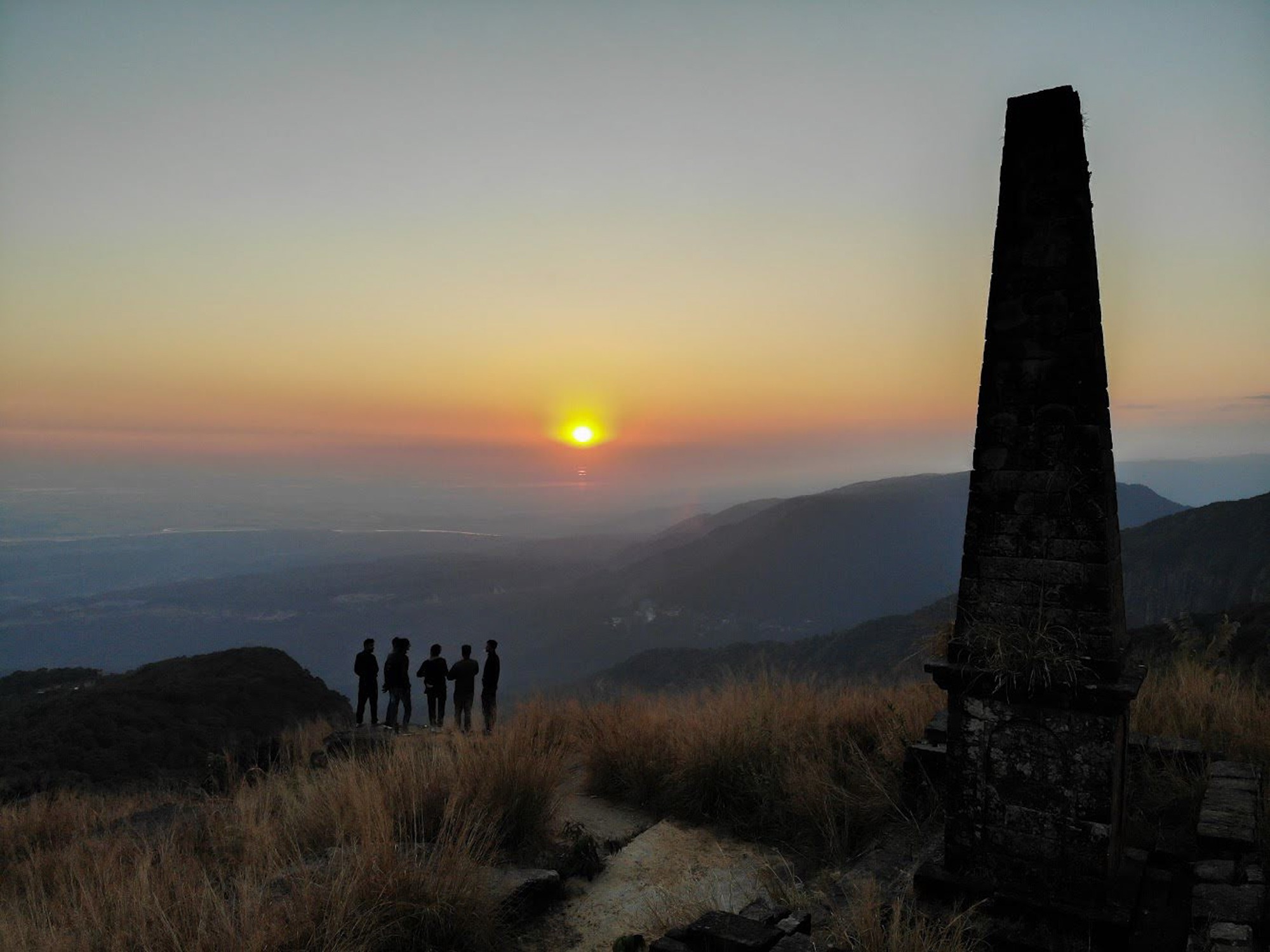
नॉर्थईस्ट भारत से पहली मुलाक़ात | असम, नागालैंड, मेघालय ट्रैवलॉग
Guide · 25 Aug 2026
सोता हुआ बुद्ध: संदाकफू रिज से कंचनजंगा का वो नज़ारा जो भूला नहीं जाता
Guide · 20 Aug 2026