

Travel Triund – A Trek too poetic!
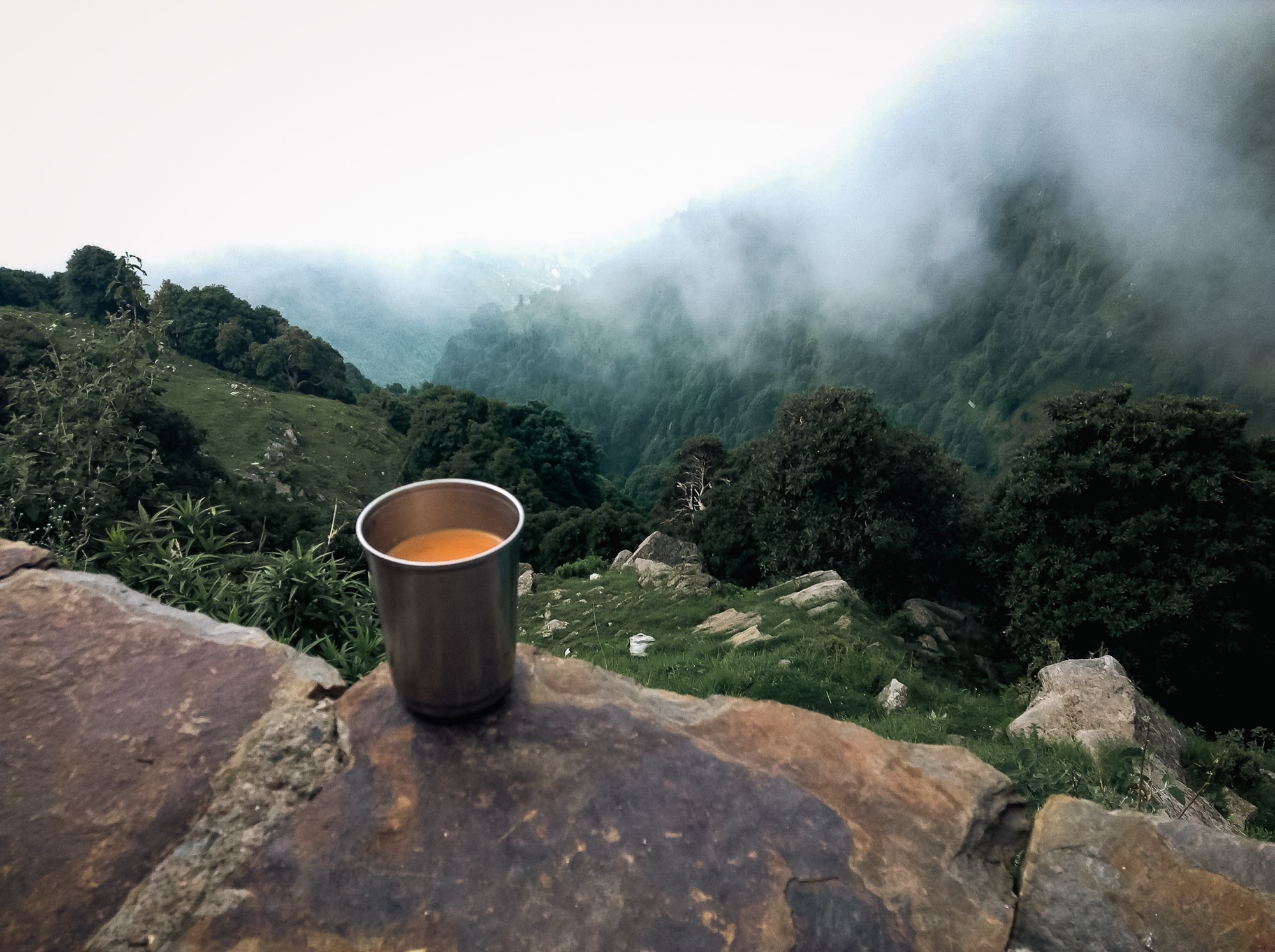
Have you ever wondered if wandering can be poetic? If not, Triund should top your trek list. It’s a trail so serene, so unhurried, that every step of yours seems to compose its own music. Triund is best known for a quietude that settles into you from the inside — an enchanting, unbroken view of the Dhauladhar range and a wide ridge of green grass unrolling into a 360-degree panorama of mountain beauty.
About the Trek
Triund is a one-day trek to the top of Triund Hill, tucked in the lap of the Dhauladhar mountains and often called the “crown jewel of Dharamshala.” The trail climbs to 2,842 metres above sea level and covers about 9 kilometres from McLeodganj. It’s a rocky byway for most of its length, but it’s forgiving enough for all age groups, and most trekkers complete it in 3–4 hours.
Appetiser for the Trek: Bhagsunag Waterfall
The day before you start trekking, a visit to Bhagsunag Waterfall makes a fine warm-up. It sits about 3 km from the main Bhagsunag Temple. You can sit by the banks of the cold, flowing stream in the valley and let a good hour pass with family or friends. Right at the deepest point of the valley, under the falls, sits Shiva Café — an open-air spot that’s become something of a visitor’s charm in itself.
When to Go
Triund stays open through most of the year, closing only when heavy snowfall blocks the trail in January and February. In July and August, monsoon rain can also slow the climb. The sweet spots are March–June and September–December, when the trail is driest, and the views are clearest.
A quick note on gear: carry a light rain layer even outside monsoon, sturdy trekking shoes with grip (the rocky stretches punish flat soles), 1.5–2 litres of water, and a headlamp if you’re camping — the last stretch of the trail has no lighting after dusk. Mobile network is patchy past Gallu Devi, so let someone know your plan before you set off.
Where to Start From
You can begin at McLeodganj itself, or drive up to Gallu Devi Temple (Gallu Point) — the last stop where the road ends for vehicles. You can park here and stock up on essentials before the climb. Gallu Point sits above Dharamkot and McLeodganj, reachable by taxi or by pony/horse if you’d rather ride up the first stretch.
The Trek
Starting from McLeodganj, the trail opens with a steep slope for the first couple of kilometres before easing into a gentler climb up to Gallu Point. From there, the next five kilometres are relatively easy — almost a warm-up for what’s ahead.
The byway winds through a lush, mixed forest of oak and deodar. Clouds drift in and out through the canopy, brushing you with a fine mist. On the right, every so often, the trees part just enough to frame Kangra Valley below, with Dharamshala, McLeodganj, and Dharamkot resting in its lap.
Along the way, roughly five tea stalls and cafés dot the trail, each a good excuse to catch your breath and take in the valley view. Food up here costs a little more than in town — entirely fair, given the altitude and the effort it takes to stock these shops.
The trek’s end isn’t really an end at all — it’s a threshold into the wider world of Dhauladhar hikes: snow-capped peaks, a floor of cloud, and mist curling around you on every side. The final kilometre asks the most of amateur hikers, unfolding across 22 switchbacks locally known as “the 22 curves.” Pace yourself here; short, steady steps beat a hard push.
The nearest snowline in the entire Himalayan range sits just 12 km away, greeting you the moment you crest Triund Hill — also known locally as Illaqa or Laka. The hilltop itself is a natural amphitheatre of grass, tailor-made for camping, with an unbroken 360-degree view of the Dhauladhar range and Kangra Valley.
Where to Stay
Triund’s highest point, at 10,632 ft, offers two main camping options: the Triund campsite near the Kunal Pathri Devi temple, and a second spot further on at Snowline Café. Tents are available for hire at reasonable rates if you haven’t carried your own.
If camping isn’t your thing, the Himachal Forest Department runs a Rest House at the hilltop with six rooms and a kitchen. For food and other essentials, three or four tea stalls near the temple stock the basics — priced a little higher than down in town, as you’d expect.
Beyond Triund: Where the Real Adventure Begins
Most trekkers treat Triund as the destination. Locals and repeat trekkers know better — it’s the gateway. Push another 2–3 km past Triund and the trail climbs to Snowline Café, sitting almost at the edge of the snowline itself, with the Dhauladhar wall rising close enough to feel touchable.
From Snowline, a steeper, rockier trail leads to Lahesh Cave, a natural rock shelter at roughly 3,300 metres, used for centuries as a halting point by shepherds and pilgrims en route to Indrahar Pass. It’s a demanding half-day add-on, best done with a local guide, but the reward is a raw, untouched stretch of the Dhauladhar with almost none of Triund’s crowds.
For those with proper acclimatisation and experience, the trail continues to Indrahar Pass at over 4,300 metres — a genuine high-altitude crossing into the Chamba valley, and one of the most rewarding treks in the region for anyone chasing something beyond a day hike.
Closer to Triund and easier on the legs, Kareri Lake, Bagga Campsite, and Guna Devi Mata are excellent options for beginners — all doable without a guide, provided you go in with a little homework done. For the more seasoned, the Dhauladhar range holds a string of demanding passes — Gaj, Minkiani, Baleni, Bhimghasutri, Toral, Kundli, Bohar, and Talang, along with Lam Dal, the range’s longest natural lake — none of which should be attempted without a professional local guide.
So don’t wait. Plan a day, or better, a two-day trip to Triund, and let the trek, the camp, and the climb do their quiet work on you.
Try travelling. Stop visiting.
RELATED
कुछ और रास्ते जो सफ़र के बाद भी साथ रहे।
Experience · 25 Aug 2026
नॉर्थईस्ट भारत से पहली मुलाक़ात | असम, नागालैंड, मेघालय ट्रैवलॉग
Guide · 25 Aug 2026
सोता हुआ बुद्ध: संदाकफू रिज से कंचनजंगा का वो नज़ारा जो भूला नहीं जाता
Guide · 20 Aug 2026