

Singh Sahab’s Museum-Home: A Face-Off With That Dream in Shangarh,Sainj Valley
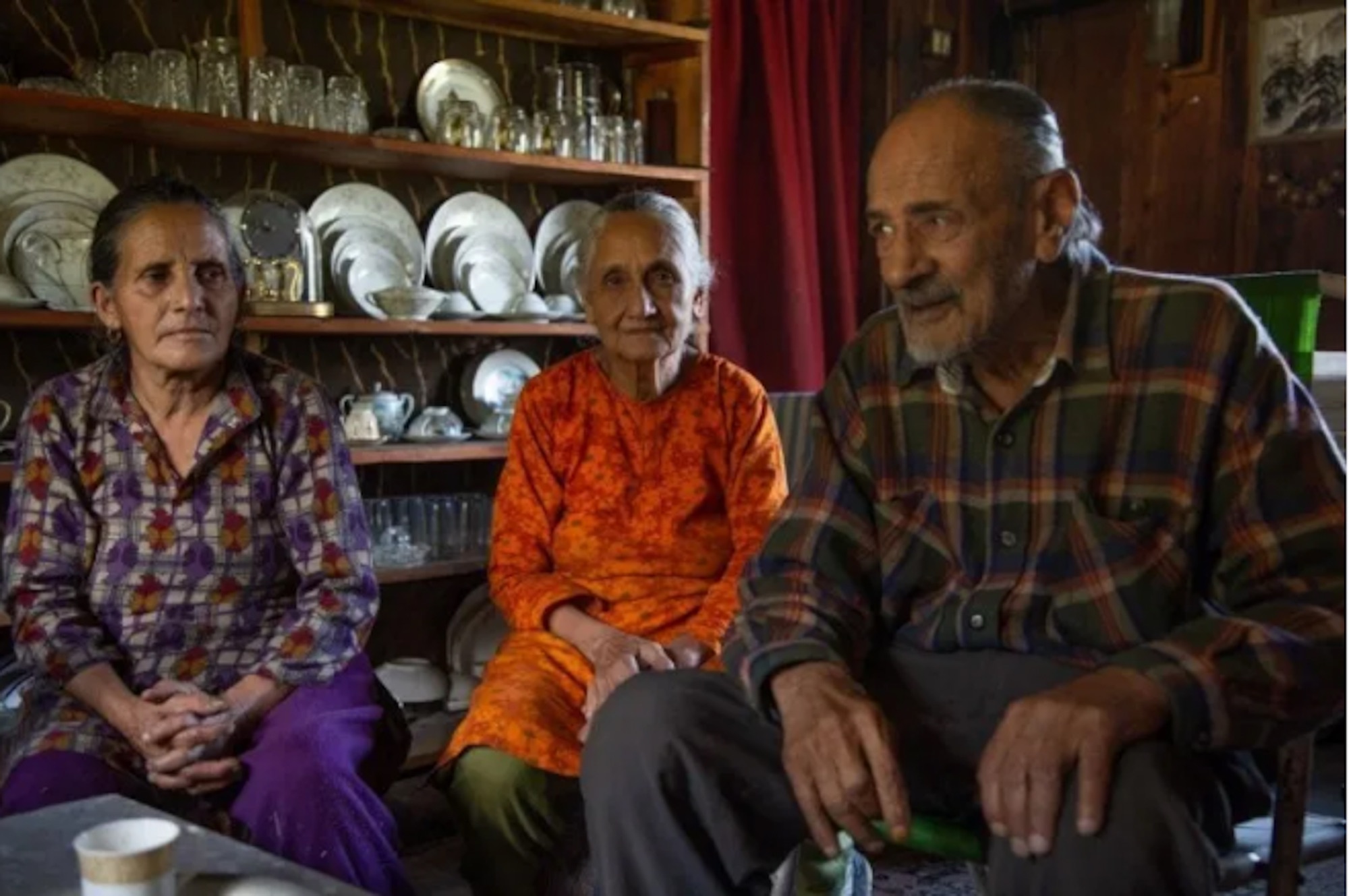
Some of us carry around a version of the dream without ever saying it out loud — a small wooden house somewhere in the hills, shelves heavy with books, a record player in the corner, and nothing left to prove to anyone. Most of us never get to stand inside that dream. We did, almost a year ago now, on a trip to Shangarh in the Sainj Valley of Himachal Pradesh, when we found our way to a home we’ve been calling Singh Sahab’s Home ever since.
It’s a typical Himachali wooden house, half an hour’s hike above Daggara village in Shangarh — small, unassuming from a distance, and entirely unprepared to be what it turned out to be inside.
We’re writing this with a heavier heart than we expected to. As we put this post together, we’re also sharing the loss of the man who made this house what it is — a man who’d describe his own extraordinary life with a shrug and four words: “I do what I do,” with something unmistakable moving behind his eyes every time he said it. Mr Virpal Singh — “the Cowboy,” as the Army still addresses him on invitation cards — breathed his last on August 7, 2018.
Singh Sahab
Mr Virpal Singh was among the first cadets of the Indian Army’s inaugural batch at the Indian Military Academy, Dehradun, in 1949. He served through the Indo-China War, and afterward moved to Kolkata to work with a shipping corporation. It was there he married Ms Tara Singh. Later, the two settled in Delhi’s Vasant Kunj.
You’re probably wondering what any of this has to do with a house tucked into the Sainj Valley.
Here’s the part that stayed with us. Mr Singh — a lifelong traveller, cyclist, adventurer, and famously devoted Arsenal fan — came to Sainj Valley one day and, as far as we can tell, never really left. He built this house by hand, and here he fell in love a second time, with a native of the valley, Ms Leelawati — Leelawati Kaki, as we came to call her. Until August 2018, Singh Sahab lived in this house with both the women he loved.
Walking into his home felt less like visiting and more like being let in on a secret. Come take a look at what we found.
The Wall That Knows It All
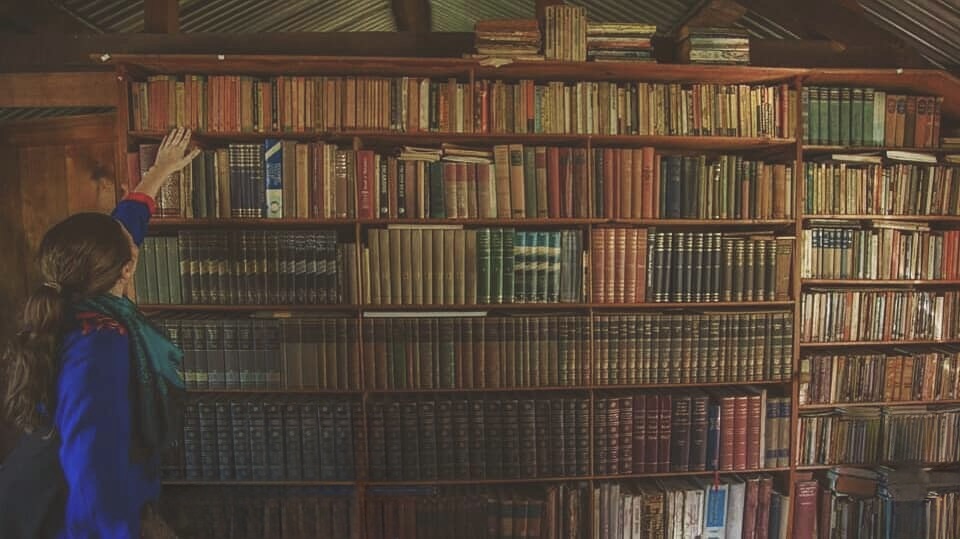
Inside the living room, one entire wall functions as a private, quietly extraordinary library — Literature, languages, medicine, engineering, and a dozen other disciplines, shelved with the kind of care that only comes from decades of actually reading them, not just collecting them.
Musings of the Past
Facing the books, another wall holds relics of a different world entirely — an assembled collection of original Victorian-era cutlery, each piece revealing its maker’s mark if you hold it up to the light just right. Beside it, a cluster of Aladdin lamps dating back to the late 1800s, still intact, still catching the afternoon light the way they must have a century and a half ago.
And Then Comes the Music
Just past the cutlery shelf, one corner of the house belongs entirely to sound. Original LPs — old jazz, rock, and metal — stacked by taste rather than alphabet, the way a person organises a collection they actually listen to. Somewhere in that stack sits an original pressing of Beethoven’s Symphony No. 6, “Pastoral,” performed by the Cleveland Orchestra under George Szell. It’s just one record among many, but it tells you everything about the kind of ear this house was built around.
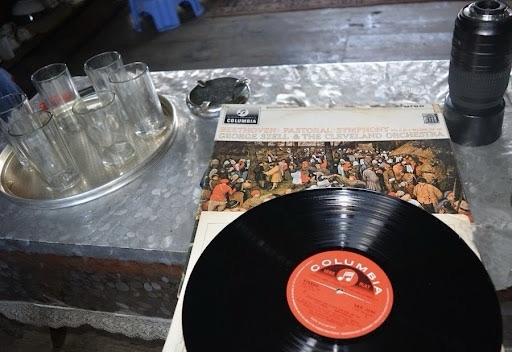
The gramophone is wired into a set of speakers and amplifiers that don’t just play the music back — they seem to fold time in on itself while doing it.
One That Literally Amplifies It All
We still find it hard to describe what it’s like hearing metal through this setup. Put simply: it teaches you something about the genre you didn’t know you were missing. What looks, at a glance, like a modest home audio corner is in fact a fully functioning speaker-and-valve amplifier system — the kind you don’t come across anymore, built to be heard rather than just owned.
This Is How It Looks From Mr Singh’s Couch
Sit where he used to sit, and a window frames the valley outside like it was placed there on purpose — which, knowing this house, it probably was.
Wait, There’s More
Mr Singh loved arms — not in the abstract, but as a subject he’d studied properly, from the history of early firearms to how the newest ones were engineered. We spent hours in conversation with him on this alone, and every story came with the same quiet authority. His second room, the workshop that once ran the entire operation of his world, holds one more thing that stops visitors mid-sentence: a mummified tiger, taken on one of his own trips to Assam, decades ago.
So, This Is Where It All Started
At the centre of that workshop sits his working table — worn, precise, clearly used rather than displayed — the place where, we imagine, most of the stories in this house first took shape.
And That’s How It Is
This house holds more stories than most people manage in a lifetime, and it holds them without needing to explain a single one. Standing inside it pulls you, whether you mean for it to or not, into a time that’s already gone and a place that already feels far away — even while you’re standing right in the middle of it.
Singh Sahab may no longer be there to greet you at the door with that half-smile and his four favourite words. But the house remains, exactly as unlikely and exactly as full as the day we found it — proof that some people build their dream instead of just carrying it around.
RELATED
कुछ और रास्ते जो सफ़र के बाद भी साथ रहे।
Experience · 25 Aug 2026
नॉर्थईस्ट भारत से पहली मुलाक़ात | असम, नागालैंड, मेघालय ट्रैवलॉग

Guide · 25 Aug 2026
सोता हुआ बुद्ध: संदाकफू रिज से कंचनजंगा का वो नज़ारा जो भूला नहीं जाता
Guide · 20 Aug 2026